
The Picasso of Pastry: Pierre Hermé
Famous in France, Japan and the United States, the man that Vogue called “the Picasso of Pastry” revolutionized pastry-making with regard to taste and modernity. With “pleasure as his only guide”, Pierre Hermé has invented a totally original world of tastes, sensations and pleasures.
Towards the end of 1996, Pierre Hermé left Fauchon to start Pierre Hermé Paris® with Charles Znaty. Their first shop opened in Tokyo in 1998, followed by a Salon de Thé in July 2000. In 2001, Pierre Hermé returned to the gourmet scene in Paris. Immediately, the pastry shop at 72 rue Bonaparte in the Saint Germain des Prés area scored a big success. Every day, enthusiastic gourmets rediscovered pastries, macarons and chocolates, with connoisseurs from all over the world flocking to this temple of sweet delights.
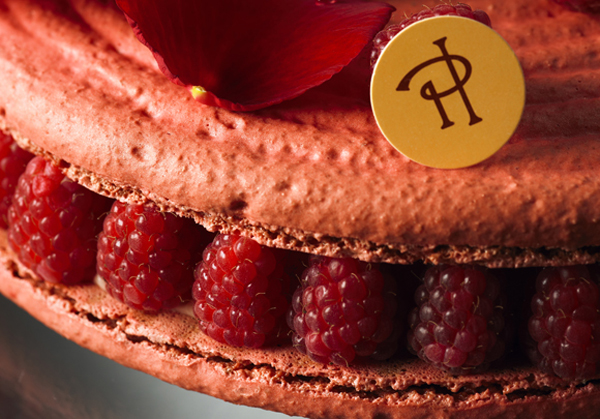

In 2004, a second shop featuring very innovative interior design opened at 185 rue de Vaugirard. In early 2005, the latest concepts from Pierre Hermé Paris® were launched in Tokyo: a “luxury convenience store” and a Chocolate Bar. Both are located in the Omotesando district, where the biggest fashion brands and companies operating in Japan have stores.
In 2011, Pierre Hermé Paris® has eight sales outlets in Tokyo, one in Osaka, nine in Paris, one in Strasbourg, two in London and an online boutique www.pierreherme.com.

Heir to four generations of Alsatian bakery and pastry-making tradition, Pierre Hermé began his career at the age of 14 as an apprentice to Gaston Lenôtre.

With his original approach to the profession of pastry chef, he revolutionizes even the most firmly entrenched traditions. For example, he prefers discreet pastry decors and “uses sugar like salt, in other words, as a seasoning to heighten other nuances of flavor.” Refusing to rest on his laurels, he is always revising his own work, exploring new taste territories and revisiting his own recipes.

As a result, praise has often been lavished on Pierre Hermé, who has been called “pastry provocateur” (Food & Wine), “an avant-garde pastry chef and a magician with tastes” (Paris-Match), “The Kitchen Emperor” (New York Times) and “The King of Modern Pâtisserie” (The Guardian), along with honors and decorations, as well as – most importantly – the admiring gratitude of connoisseurs of gourmet sweets.

“La gourmandise: an infinite source of pleasure.”


Read page 2 to see what his partner Charles Znaty has to say about him.
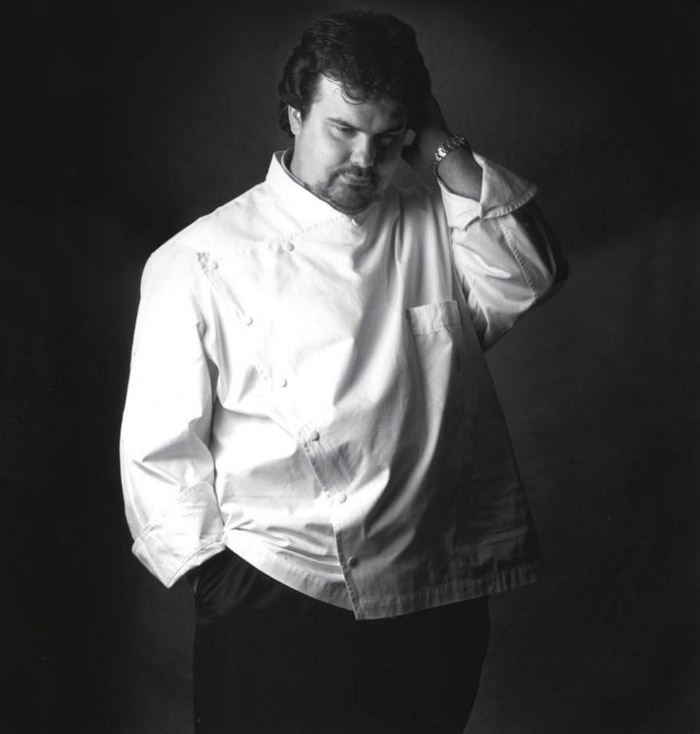
PIERRE HERME: A MYSTERY
by Charles Znaty
H
e is often asked where and how he gets his ideas for taste, texture and flavor combinations, these tasty creations that make up his brand and are recognizable among a thousand. He willingly answers… inspiration comes from his desire for sweets, pleasure, sensations, encounters, fragrances and textures. Pierre Herme? is curious about everything and everything inspires him. It seems so easy! He travels while we are carried away by his creations. Many things have been written about Pierre Herme?: that he is ‘ the Picasso of pastry-making; a Virtuoso of sweets; an Architect of emotions; the Dior of desserts”… but comparisons sidestep the issue. Various explanations have been sought, such as the lineage of pastry chefs he comes from, his training with the master Gaston Leno?tre, or his Alsatian heritage. Pierre Herme? admits that he owes his “passion for the profession” and his excessive taste for “work well done” to all of the above. To these criteria, he immediately adds “his eye for detail” and his “mental imagery”. These images let us catch a glimpse of his inner imaginary landscape, a sort of Zen garden where each stone contains an emotion, which Pierre Herme?, tirelessly and with patience, arranges with his delicate touch and that special tenderness of his which at times is visible in his eyes. A “mental landscape” where he finds his inspiration, cultivates, composes, imagines, looks, weighs and invents what our pleasures of tomorrow will be.
Y
et, after my ten years spent working by his side, navigating the mysteries of his creative repertoire, it seems as if the heart of the matter is still to be unveiled. Let us look at his past. Speaking of know-how, it is a heritage handed down by our predecessors, which we have a duty to transmit to each generation. At Pierre Herme?, the pastry chefs come from all over the world yet all of them speak the same language. As for technique, it lies in an ironclad discipline that has to be perfectly mastered to contain it within ancillary limits only to be released when the moment to create arrives. No creation of his yields to the temptation of a technical feat and if his peers admire Pierre Herme?, it is also because he implements techniques with such mastery – or even invents them, if necessary – and subjugates them to the pleasure of eating and sharing, rather than contenting himself with the appreciative remarks that an elite on the look-out for technical feats and dazzling gestures would easily have granted him. Regarding ingredients, they are “faux-amis” whose facets he manages to tame before giving them a place in the recipe. Obviously, not all pistachio nuts or chocolates are alike … and vanilla or rose can exhale very different aromas. As for sugar, it is sometimes a “backdrop”, sometimes “a seasoning, a condiment” which contributes to the balance of the composition without ever seeking the leading role. Because Pierre Herme? considers the end of the meal as “a grand finale”, he has brushed aside pastries in which sugar, a sycophantic cover, flattened the flavors and masked the lack of nobility of the composition.
A
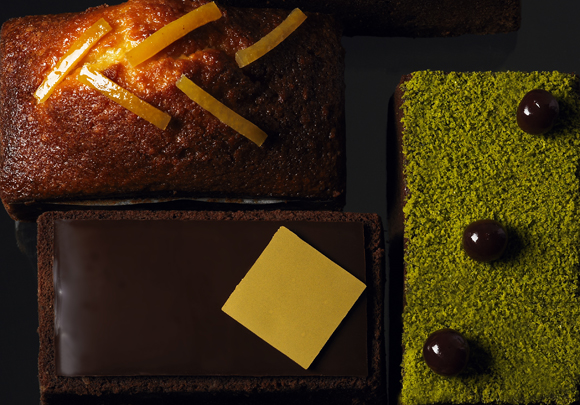
s for childhood tastes, Pierre Herme?’s contribution has proven to be iconoclastic. Not being satisfied with depriving his pastries of all of the mannerisms, embellishments, useless decors that prevail in the field, he also relegated to the rank of gadgets the references to the world of childhood. By showing in his creations that sweets are not the prerogative of youth, Pierre Herme? opened wide the doors of the Gastronomy circles to admit pastry chefs once and for all. Although connoisseurs might like to think so, Pierre Herme? does not rely on Proustian madeleine effects or “kiddie cartoon” mixtures, the reason being that nostalgia will always taste the same.
In 1986, when he began to seek inspiration from the cycle of the seasons to invent new sweet pleasures, Pierre Herme? chose the path of Nature. The freshness of the seasonal fruits, the climate, the fluctuations of his cravings commanded new recipes, new creations. This was not the simplest avenue of exploration. About a thousand recipes and several pa?tisserie windows still testify to that era. It is said that, no man is a prophet in his own land. Is this the reason why we had to go all the way to Japan to open the first “Pierre Herme? Pa?tisserie Paris” boutique in 1998? By inventing the “Patisserie Haute- Couture” concept and by making this “Collection” idea popular, we only tried to show a well-informed and novelty-eager Japanese public that we were different. And it was a big success.
More information at www.pierreherme.com – Read his interview on Peut Etre Magazine