
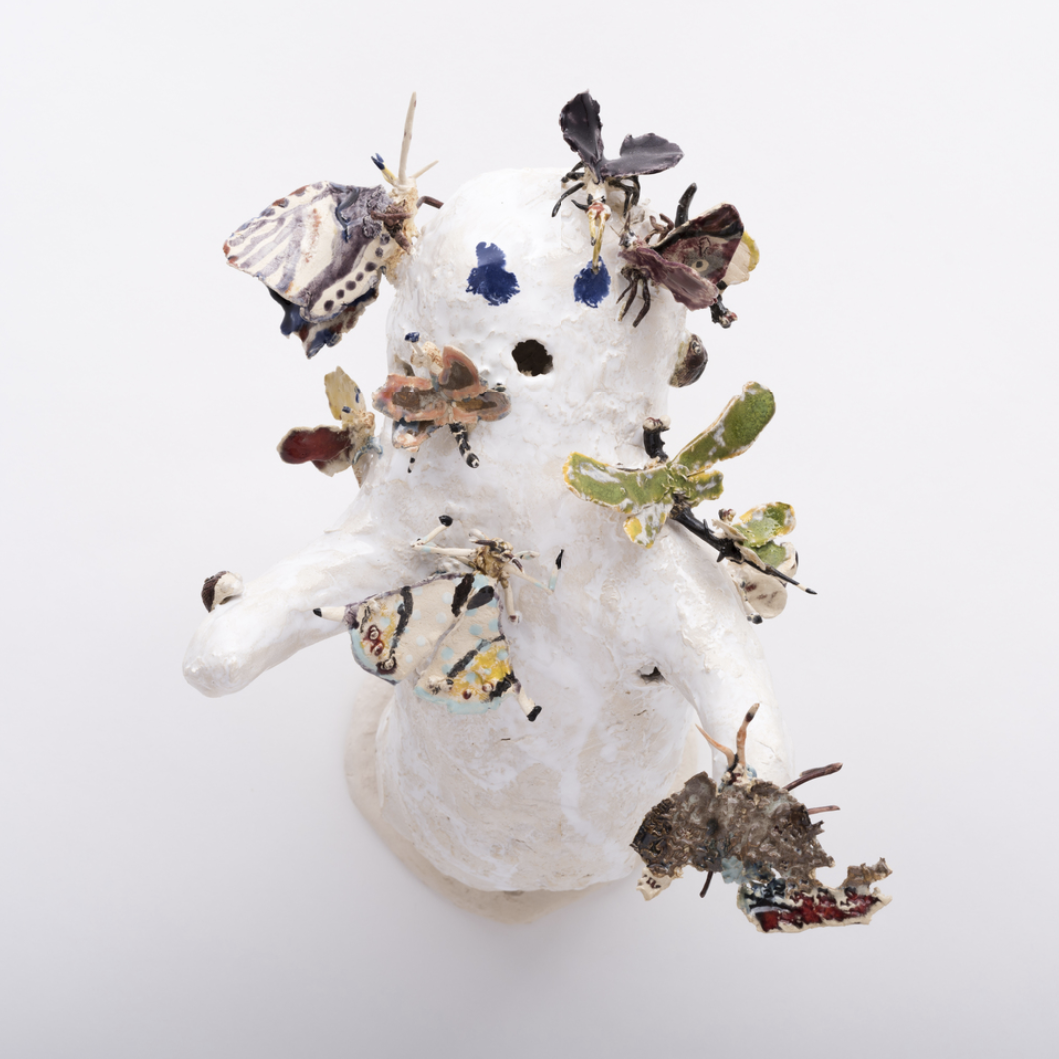

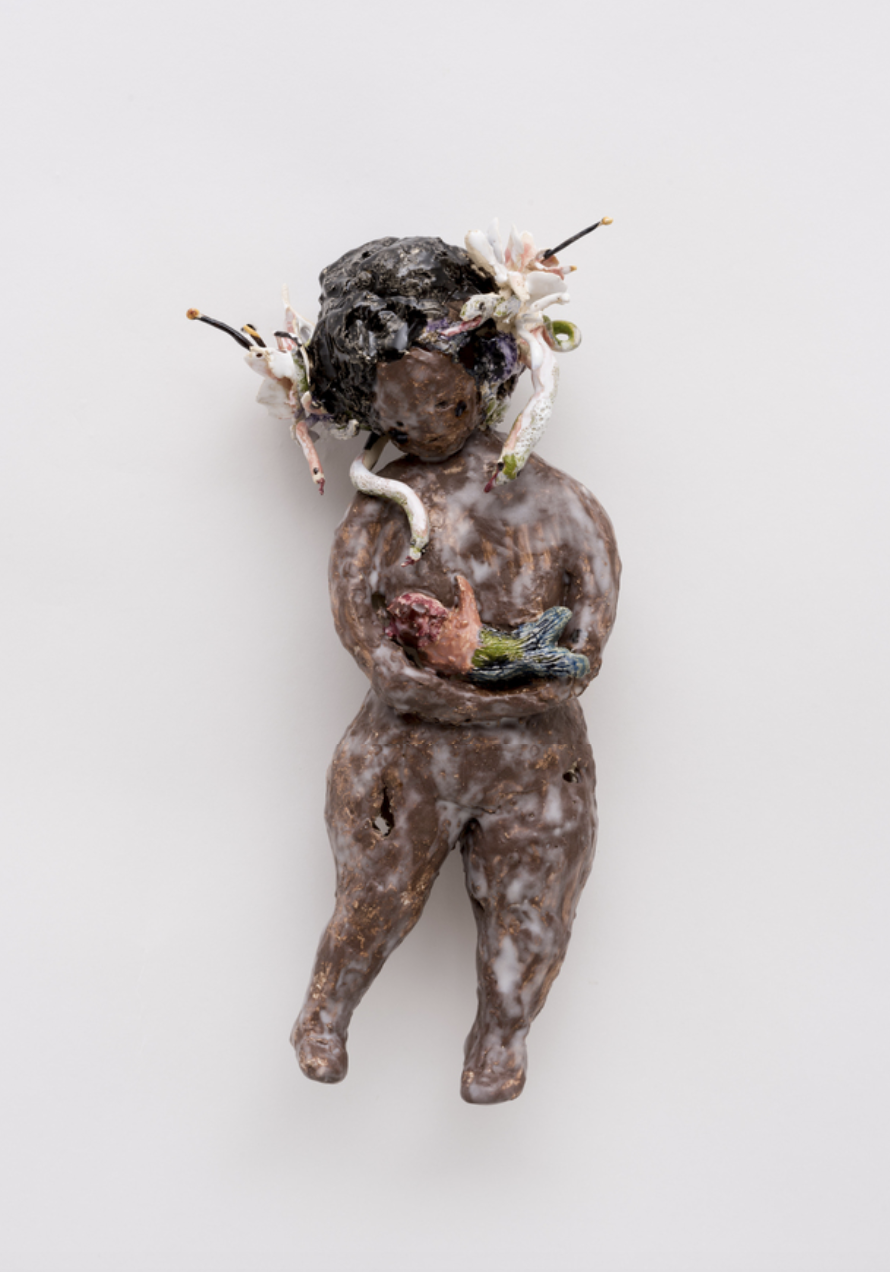
Asana Fujikawa loves telling tales. From erotically-charged ceramics to fantastical etchings, the Hamburg-based artist’s work is infused with fairytale logic, each piece elaborating on a mythology she spins across time and media.
After exhibiting her first solo show at Klaus Gerrit Friese Gallery in Berlin late last year, Fujikawa is taking time to discover a new rhythm for her practice. I caught up with her to discuss folklore, Henri Matisse and clay communions.
What inspired you to pursue an artistic career?
Whilst I was making art I met many people who inspired me. I wanted to continue to work with them, which led me to pursue an artistic career.
Your œuvre encompasses a broad range of media, from etchings and paintings to sculpture and performance art. Can you tell us about your evolution through these different practices? How do you decide which material is the best mode of expression for your ideas?
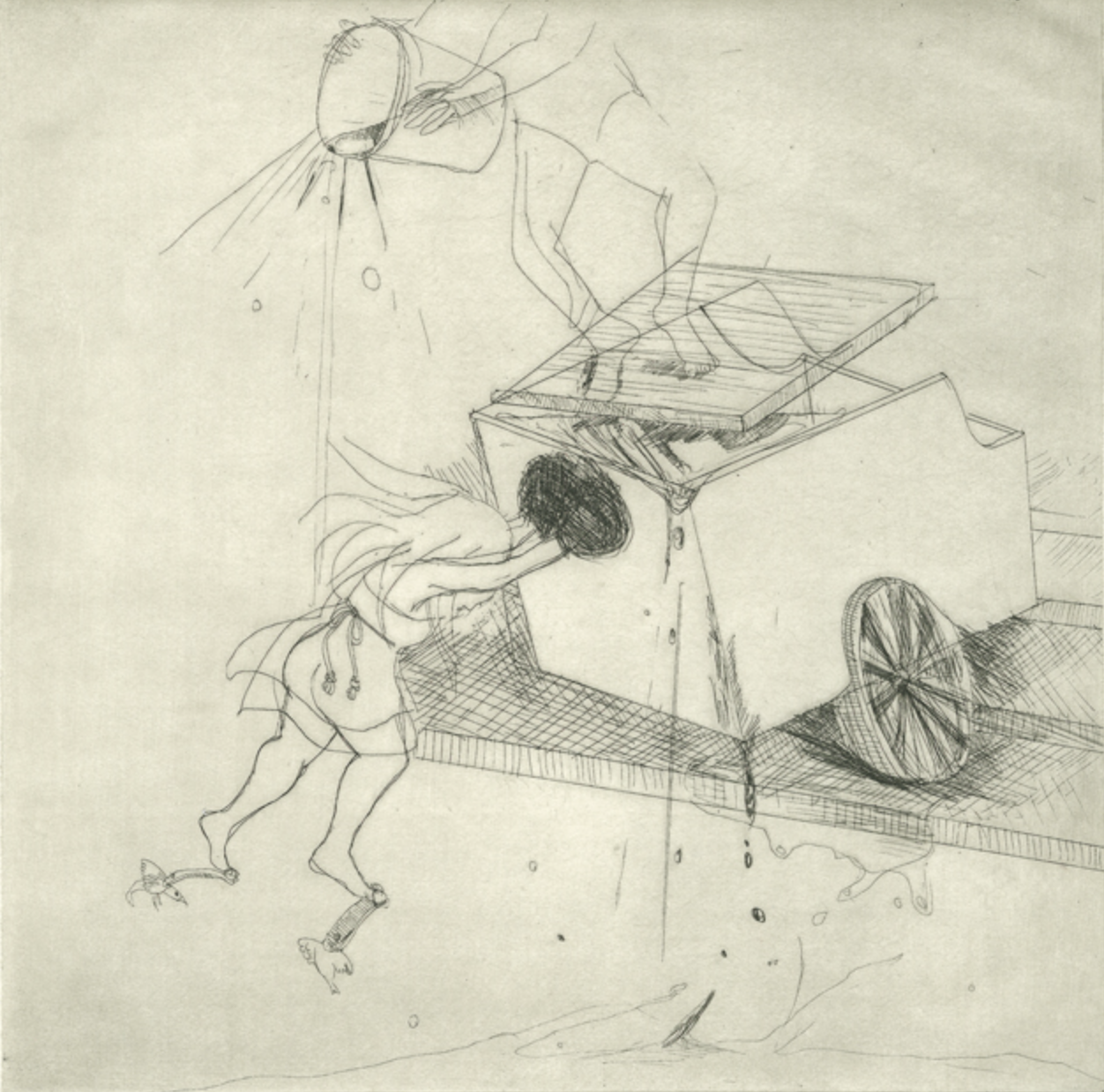
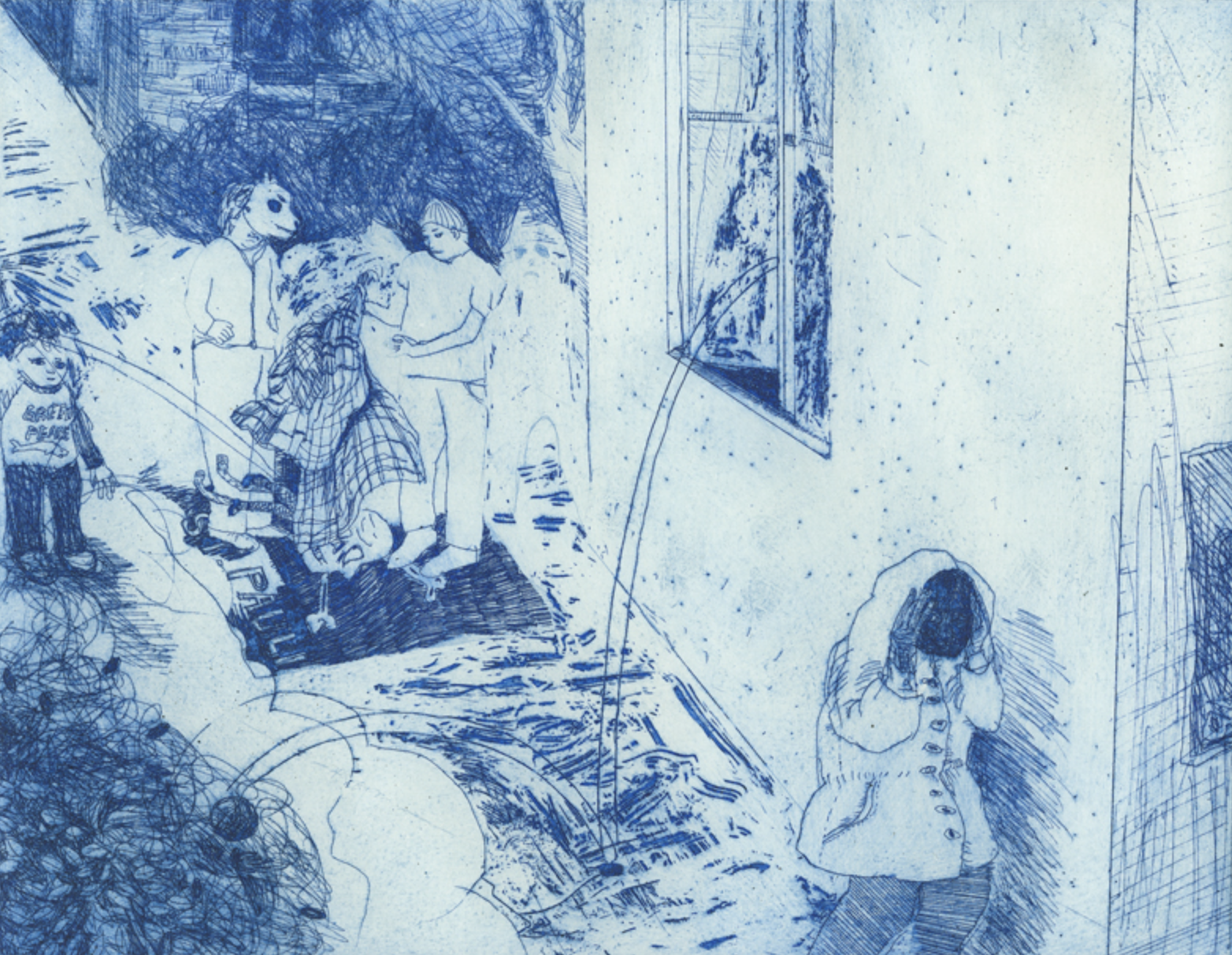
First I tried to be a good painter. I loved the works of Henri Matisse and I wanted to paint like him, but it was very difficult. I felt that the paint and I couldn’t understand each other. After several years, I experimented with etching, and I no longer needed the material to tell me what I wanted to say. It was a joyful moment. I had a similar experience with ceramics. I feel as if I can talk with clay, especially at night in my studio.
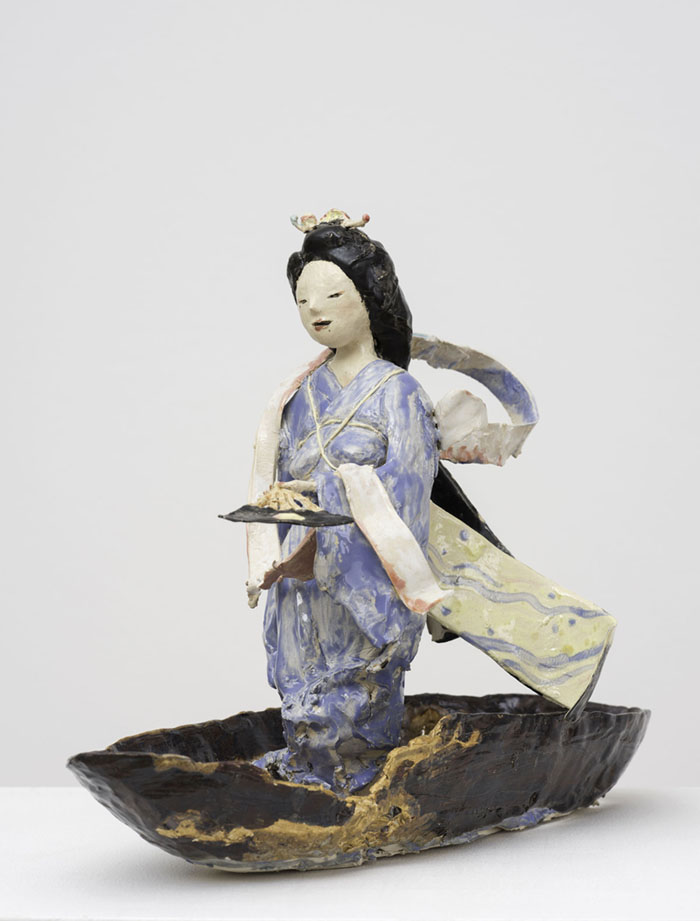
This year you hosted your ?rst solo exhibition, Einmal ?elen weiße Tropfen aus deiner Brustwarze auf meinen Stöckelschuh, weißt du noch? (Once white drops fell from your nipple onto my high heel, do you still remember?) at Galerie Klaus Gerrit Friese. Can you tell us about the show?
Klaus Gerrit Friese Gallery is in Scharlottenburg in Berlin. I enjoyed making the show with a Gallery in such a historical city! I showed my ceramic ?gures from the past five years. They’re based on several stories which I created. The main themes are family, love and transience.
Your sculptures have a sort of narrative quality, like they’re characters stumbled upon in media res. What’s the story of Ein Waldmensch, der mit einer Schnecke zusammen lebt or even Auf dem wasser musst du ständig aufpassen, dass du regelmäßig atmest?
The ?gure Waldmensch is trying to cut off his arm in horror. It’s covered with growing plants, and he wants to stop the metamorphosis. The ?gure is part of a story, Metamorphose. In this story, there is a magic forest where poisonous yews grow. A transformation takes place when one enters the forest: trees grow from one’s arms or body and one no longer looks like a human being. The forest people, Waldmensch, had such a problem. They used to be forest workers and wore orange overalls. They grew very afraid when the transformation began, and attempted to preserve their human souls by creating containers from forest earth to store them in, before the workers turned completely into wood. Two girls also go to the forest, but they take pleasure in the metamorphosis. A Japanese deity living in the forest observes and sings, but does not intervene in the action.


How would you describe the in?uence of folklore on your art?
From a young age I loved to read folktales and myths from around the world. I grew up in a small Japanese town, which is surrounded by mountains full of D?sojin. D?sojin are stones which are worshiped as tutelary deities. They’re just stones, but when I stand in front of them and close my eyes for 10 seconds, I experience a short meditation. You will ?nd many such places in Japan. This experience helps me to lay a foundation for how I communicate with materials, especially clay. When I meditate on how the ?gure should look, I try to talk with the clay in my hands. This communion is the same as with the D?sojin.
In addition to making your own art, you’re a resident of the Künstlerhaus Vorwerkstift in Hamburg, and head of its gallery group. How do you think being part of this creative community has shaped your practice?
One of the reasons I came to Germany from Japan 12 years ago, was the opportunity to lead an artistic lifestyle in Europe. I lived in the artist-house Vorwerkstift in Hamburg for five years, and I met many young artists who were sympathetic and ambitious, serious about their lives. That was a great experience for me.
What are you working on right now?
I’ve had several shows in the last four years, but now I want to relax and ?nd a new rhythm for my life as an artist. That’s what I am working on now.


![Jonathas and the Fish [Brazil]](https://trendland.com/wp-content/uploads/2021/12/jonathas-de-andrade-brazil-art-biennale11-100x100.jpg)
![Sleepwa[l]king concept for 2022 by Yummy Colors](https://trendland.com/wp-content/uploads/2022/01/sleepwalking-carddeck-yummycolors-2022-9-100x100.jpg)