
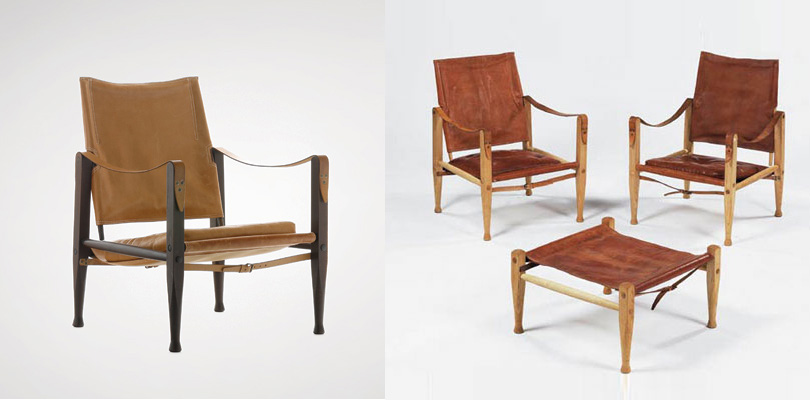


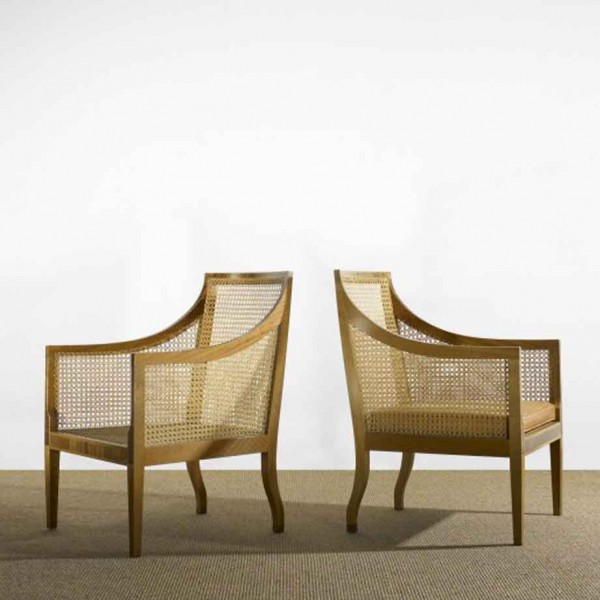
I recently discovered Kaare Klint while at Brimfeild flea market negotiating on these amazing Safari chairs – After doing some research I discovered he is one the most important Mid-Century Danish designers. Here is some of his most known pieces.
The influence that Kaare Klint (1888–1954) has had on Danish furniture design is difficult to overestimate. He was the primary force in the founding of the furniture school at the Royal Academy of Fine Arts in Copenhagen in 1924, and as a professor here he shaped many of the young designers, most notably Poul Kjærholm and Børge Mogensen.

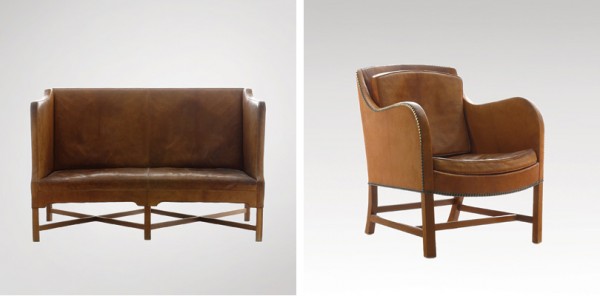
Made by Rud. Rasmussen. Stained ash and leather
While modernism — Bauhaus — was rejecting its heritage, Klint embraced it. He believed that a thorough understanding of materials, proportions and constructions of classical furniture was the best basis for designing new. The design of Klint’s pieces is always based on a relentless research — every piece must fulfil its purpose, be absolutely clarified in its construction, have proportions which corresponds to those of the human body, and display materials and craftsmanship of the highest quality.
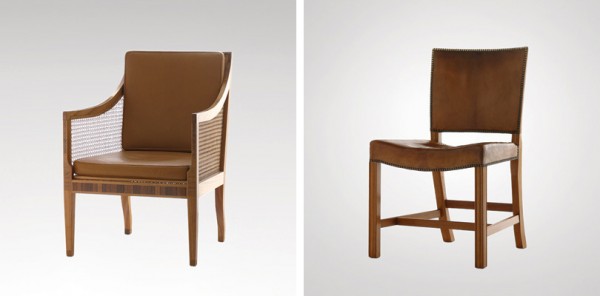
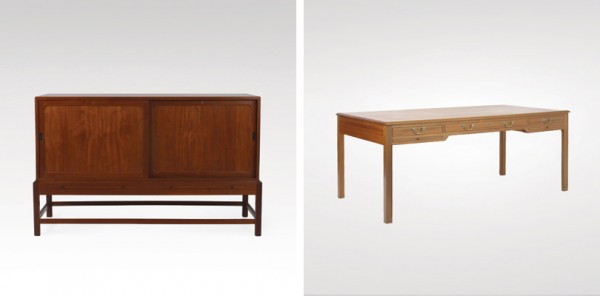
Klint’s first major work was a collaboration with his mentor, the architect Carl ‘Calle’ Petersen. In 1914 they were commissioned to design furniture and fixtures for the Faaborg Art Museum. This resulted in, among other things, the well-known “Faaborg Chair”, a light and elegant piece with clear references to classical furniture. The construction and proportions of an 18th century English chair were clearly visible in “The Red Chair”, designed in 1927, but with its straight back, deprived of all unnecessary decoration and its beautiful Nigerien leather, the chair was nowhere close to being an imitation. Other important works by Kaare Klint include “The Propeller Stool”, also from 1927; an easy chair designed in collaboration with his pupil Edvard Kindt-Larsen in 1930; “The Safari Chair” and “the Deck Chair” designed in 1933; and “The Church Chair” designed in 1936 for the Bethlehem Church in Copenhagen. Also worth mentioning is Klint’s well-proportioned cabinets and wardrobes, all made in solid Cuban mahogany.

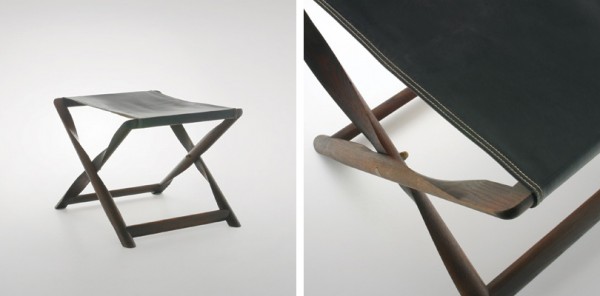
Made by Rud. Rasmussen. Stained oak and leather
More information on Danish Furniture and images via www.danish-furniture.com